Memory Verse:
“This was to fulfill what was spoken through the prophet Isaiah: ‘He took up our infirmities and carried our diseases’” Matthew 8:17
“But you will receive power when the Holy Spirit comes on you; and you will be my witnesses in Jerusalem, and in all Judea and Samaria, and to the ends of the earth.” Acts 1:8
HOW HAS CHRIST MADE PROVISION FOR HEALING
It is the will of God that each believer should be filled with the Holy Spirit and be sanctified wholly, being separated from sin and the world and fully dedicated to the will of God, thereby receiving power for holy living and effective service.
Provision is made in the redemptive work of the Lord Jesus Christ for the healing of the whole person. Prayer for the sick and anointing with oil are taught in the Scriptures as privileges for the Church in this present age and a primary activity of Christian witness.
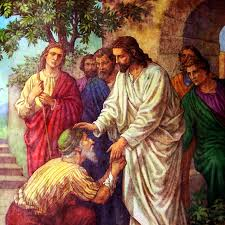
A great portion of Christ’s time was dedicated to healing the sick. He healed all kinds of people: the blind, the paralyzed, the lame, the deaf, lepers, those who had fevers, and many with chronic illnesses.
We find no record in the gospels of Jesus turning away anyone who came to Him for healing, nor do we find that any disease was too difficult for Him to heal. He even raised the dead. Miraculous healings still occur today—evidence that Christ is still our Healer.
Share a story about healing.
In “The Gospel of Healing” The Founder of the Christian and Missionary Alliance writes,
“Man has a two-fold nature. He is both a material and a spiritual being. And both natures have been equally affected by the fall. His body is exposed to disease; his soul is corrupted by sin. We would therefore expect that any complete scheme of redemption would include both natures, and provide for the restoration of his physical as well as the renovation of his spiritual life. Nor are we disappointed. The Redeemer appears among men with both hands stretched out to our misery and need. In the one He holds salvation; in the other, healing. He offers Himself to us as a complete Saviour; His indwelling Spirit
the life of our spirit; His resurrection body the life of our mortal flesh. He begins His ministry by healing all that had need of healing. He closes it by making on the Cross a full atonement for our sin; and then on the other side of the open tomb He passes into Heaven, leaving the double commission for “all the world,” and “all the days even unto the end of. the world;”–“Go ye into all the world and preach the Gospel to every creature. He that believeth and is baptized shall be saved. He that believeth not shall be damned. And these signs shall follow them that believe. In My name they shall cast out devils . . . .
they shall lay hands upon the sick and they shall recover.”
This was “the faith once delivered unto the saints.” What has become of it? Why is it not still universally taught and realized? Did it disappear with the Apostolic age? Was it withdrawn when Peter, Paul, and John were removed? By no means. It remained in the Church for centuries and only disappeared gradually in the growing worldliness, corruption, formalism and unbelief of the early Christian centuries. With a reviving faith, with a deepening spiritual life, with a more marked and Scriptural recognition of the Holy
Spirit and the Living Christ, and with the nearer approach of the returning Master Himself, this blessed Gospel of physical redemption is beginning to be restored to its ancient place, and the Church is slowly learning to reclaim what she never should have lost. But along with this there is also manifested such a spirit of conservative unbelief and cold, traditional, theological rationalism as to make it necessary that we should “contend earnestly for the faith once delivered unto the saints.” First of all we must be sure of our
Scriptural foundations. Faith must ever rest on the Divine Word; and the most important element in the “prayer of faith” is a full and firm persuasion that the healing of disease by simple faith in God is, beyond question, a part of the Gospel and a doctrine of the Scriptures.
Reading Exodus 15: 25, 26
What do you observe?
What does the passage mean?
How do we apply this to us today?
Reading Psalm 105:37
What do you observe?
What does the passage mean?
How do we apply this to us today?
In Job chapter 1 and 2. The story of Job is one of the oldest records of history. It gives us an unmistakable view of the source from which sickness comes–Satan; and the course which brings healing, taking the place of humble self-judgment of the mercy-seat. If ever a sick chamber was unveiled it was that of Uz. But we see no physician there, no human remedy, but only a looking unto God as his Avenger.
And when he renounces his self-righteousness and self-vindication and takes the place where God is seeking to bring him-that of self-renunciation and humility-he is healed.
Reading Psalm 103:2-3
What do you observe?
What does the passage mean?
How do we apply this to us today?
Reading 2 Chronicals 16:12-13
What do you observe?
What does the passage mean?
How do we apply this to us today?
It is God’s will that we seek Him for healing
Reading Isaiah 53:4-5
What do you observe?
What does the passage mean?
How do we apply this to us today?
Jesus Christ has SURELY BORNE AWAY and CARRIED OFF our sicknesses; yes, and even our PAINS, so that abiding in Him, we may be fully delivered from both sickness and pain. Thus “by His stripes we are healed.” Blessed and glorious Gospel! Blessed and glorious Burden Bearer. Thus the ancient prophet beholds in vision the Redeemer coming first as a Great Physician, and then hanging on the Cross as a Great Sacrifice.
Reading Matthew 8:17
What do you observe?
What does the passage mean?
How do we apply this to us today?
This is quoted as the reason why He healed all that were sick. It was not that He might give his enemies a vindication of His Divinity, but that He might fulfill the character presented of Him in ancient prophecy. Had he not done so, He would not have been true to His own character, and if He did not still do
so, He would not be–“Jesus Christ, the same yesterday, to-day, and forever.” These healings were not occasional, but continual; not exceptional, but universal. He never turned any away. “He healed all that were sick.” “As many as touched Him were made perfectly whole.” He is still the same.
Provision is made in the redemptive work of the Lord Jesus Christ for the healing of the whole person. Prayer for the sick and anointing with oil are taught in the Scriptures as privileges for the Church in this present age and a primary activity of Christian witness.